Best Customer Data Platforms (CDP) for 2026
Business SoftwareData PlatformsEmail Marketing
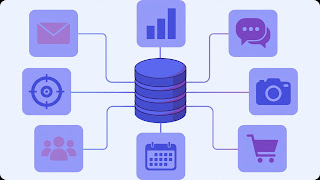
Every tool your team uses collects a little piece of the customer picture: the website knows what people browsed, the email platform knows what they opened, support knows what they complained about, and sales knows what they said on calls. Customer data platforms exist to pull those pieces together. If you are comparing customer data platforms for 2026, this guide explains what a CDP actually does, how it differs from a CRM, the features that matter, and the leading platforms worth shortlisting.
What Is a Customer Data Platform?
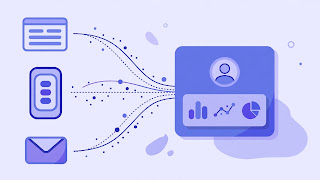
A customer data platform (CDP) is software that collects customer data from all your sources - website, app, email, ads, support, sales - resolves it into one unified profile per person, and makes that profile available to your other tools in real time. When a visitor becomes a customer, the CDP knows it is the same person. When they open a support ticket, marketing can see it. The CDP itself usually does not send your campaigns; it makes every tool that does send them smarter.
CDP vs CRM vs DMP: What Is the Difference?
- CRM (customer relationship management): built for sales and service teams to manage known contacts and deals. A CRM stores data your team enters or that comes from direct interactions. If you need that side first, start with our in-depth HubSpot CRM guide for growing businesses.
- CDP: built for marketers and data teams. It collects first-party behavioral data automatically, unifies identities across devices and channels, and pushes audiences and events out to many tools.
- DMP (data management platform): an older ad-tech category that works mainly with anonymous, third-party cookie data for ad targeting. As third-party cookies fade, most businesses now choose a CDP instead.
A useful shorthand: a CRM manages relationships with people you know, a DMP targets audiences you do not, and a CDP connects the data about both - with consent - into one profile.
Who Actually Needs a CDP?
Not every business does. A CDP earns its cost when several of these are true: you sell through more than one channel (web, app, email, retail, sales team); you run paid ads and want to suppress existing customers or build lookalike audiences from real purchase data; your customer data is scattered across so many tools that reports contradict each other; you need consent and privacy controls applied consistently everywhere; or you want personalization based on behavior, not just name and email. A small business with one website and one email list will usually get more from a good CRM - see our roundup of the top CRM software for startups - plus its existing analytics.
Key Features to Compare
- Data collection: ready-made connectors for your stack, plus website and app tracking that does not need constant developer help.
- Identity resolution: how well it merges anonymous visits, multiple devices, and offline records into one person - the core job of a CDP.
- Audience building and activation: segment creation your marketing team can use without writing code, and live syncing to ad platforms, email tools, and your warehouse.
- Real-time behavior: whether profiles update in seconds (needed for on-site personalization) or in daily batches.
- Consent and privacy: built-in consent capture, deletion requests, and regional privacy controls.
- Where data lives: some platforms copy data into their own cloud; "composable" options run on top of your existing data warehouse, which some data teams strongly prefer.

Top Customer Data Platforms for 2026
Segment
One of the best-known names in the category, popular with product and engineering-led teams. Strong on event collection and routing data to hundreds of destinations. Best for: companies that generate lots of product and website event data. Pricing typically starts with a free or low-cost tier for small volumes and scales with the number of monthly tracked users, moving into custom annual contracts at higher volumes.
HubSpot (Smart CRM with Data Hub)
HubSpot has grown from a CRM into a platform with serious data unification features, which suits teams that want the CDP and the CRM in one place. Best for: small and mid-sized businesses already using HubSpot for marketing or sales. Pricing typically follows HubSpot's hub-and-tier model, so costs commonly rise as you add seats and higher tiers.
Tealium
A long-established enterprise option with deep tag management roots and strong governance features. Best for: large organizations and regulated industries that need strict control over data collection and consent. Pricing is typically enterprise-level annual contracts, quoted per business rather than listed publicly.
BlueConic
Built with marketers in mind, with a visual interface for building profiles and lifecycle audiences, and popular with media, retail, and consumer brands. Best for: marketing teams that want to move without constant developer involvement. Pricing is typically a mid-market annual subscription based on profiles and usage.
Lytics
Focuses on behavioral scoring and predictive audiences - who is likely to buy, churn, or engage - layered on top of unified profiles. Best for: teams whose main goal is smarter ad and email targeting. Pricing typically sits in the mid-market range with annual plans.
Treasure Data
An enterprise CDP with strong data engineering under the hood, widely used by large consumer brands with very high data volumes. Best for: big organizations with complex, multi-brand data. Pricing is typically custom enterprise contracting.
How to Choose the Right CDP
- Start from use cases, not features. Write down three things you will do with unified data in the first 90 days - for example, suppressing customers from acquisition ads or triggering emails from product behavior. If you cannot name them, you are not ready to buy.
- Audit your data sources. List every tool holding customer data and check the CDP connects to all of them, including how events will flow into your email marketing platform, which we compare in detail here.
- Test identity resolution with your own data. In a trial, check how the platform handles the messy reality: shared devices, typos in emails, guest checkouts.
- Decide who will run it. Some platforms assume a data engineer; others are built for marketers. Buy for the team you actually have.
- Model the total cost. Pricing based on profiles, events, or tracked users grows with your success - project the cost at double your current volume before signing.
Implementation Tips That Save Months
- Clean before you connect. A CDP unifies the data you feed it; feeding it duplicates and junk just gives you unified junk.
- Agree on a naming standard for events. Decide once how actions are named ("checkout_completed", not five variants) or reporting will fragment immediately.
- Launch with one or two use cases. Prove value on ad suppression or one personalization flow, then expand sources and destinations gradually.
- Put consent first. Configure consent capture and deletion workflows before activation, not after a complaint.
- Review profiles quarterly. Data decays; build a habit of checking match rates and stale sources.
Frequently Asked Questions
Is a CDP the same as a CRM?
No. A CRM helps sales and service teams manage known contacts and deals. A CDP collects behavioral and transactional data from many systems, unifies it into single profiles, and shares those profiles with all your tools, including the CRM. Many businesses run both.
How much does a CDP typically cost?
Entry-level options can start modestly for low data volumes, but most established customer data platforms are sold as annual subscriptions that commonly run from the low five figures per year upward for mid-sized businesses, and considerably more at enterprise scale. Pricing usually scales with profiles, events, or tracked users.
Do small businesses need a CDP?
Usually not at first. If your data lives in two or three tools and your CRM reports already make sense, invest there. A CDP starts paying off when channels multiply, ad spend grows, and teams start arguing about whose numbers are right.
How long does CDP implementation take?
Connecting core sources and activating a first use case commonly takes a few weeks with a focused team. Enterprise rollouts with many sources, regions, and consent requirements can take several months.
What is a composable CDP?
Instead of copying your data into the vendor's system, a composable CDP works directly on data stored in your own warehouse. It suits companies that already have a strong data team and want to keep one copy of customer data under their own control.
Conclusion
The best customer data platforms do one job exceptionally well: they turn scattered clicks, purchases, and conversations into a single trustworthy profile that every tool can act on. Choose based on three concrete use cases, test identity resolution with your own messy data, and model the cost as your data grows. Get those right, and a CDP stops being another subscription and starts being the reason your marketing finally agrees with itself.