Understanding SOC 2 Compliance in Cloud Software
Business SoftwareCloud & Productivity ToolsCompliance & Security
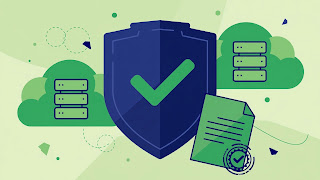
If you sell software to other businesses, sooner or later a prospect will ask one short question: "Are you SOC 2 compliant?" SOC 2 compliance has become the standard way for SaaS companies to prove they handle customer data responsibly. It is not a law, and it is not a certificate you buy off a shelf. It is an independent audit of how your company actually operates, judged against criteria written by the American Institute of Certified Public Accountants (AICPA). This guide explains what SOC 2 is, how Type I and Type II differ, and how a small company can prepare.
What SOC 2 Actually Is
SOC stands for System and Organization Controls. A SOC 2 report is produced by a licensed CPA firm after it examines the controls your company uses to protect customer data and keep your service running properly. The audit is based on the AICPA's Trust Services Criteria, which cover five areas:
- Security - protection against unauthorized access, physical and logical - the one criterion every SOC 2 report must include.
- Availability - whether the system is available as promised, including backups, recovery, and incident handling.
- Processing integrity - whether system processing is complete, valid, accurate, timely, and authorized.
- Confidentiality - whether information marked as confidential is protected the way you committed to protect it.
- Privacy - how personal information is collected, used, retained, disclosed, and disposed of.
Most SaaS companies start with security alone, then add availability and confidentiality as customers demand them. SOC 2 does not hand you a fixed checklist: the criteria describe outcomes, so two companies can pass with quite different controls. Your job is to design controls that fit how your company really works, then prove they operate consistently.
Type I vs Type II: The Difference That Matters
SOC 2 reports come in two types, and confusing them is the most common beginner mistake.
A Type I report describes your controls at a single point in time. The auditor checks whether the controls are suitably designed on a specific date. It is faster and cheaper, and a reasonable first milestone for a young company that needs something credible to show enterprise prospects.
A Type II report goes further. It covers an observation window, commonly three to twelve months, and the auditor tests whether the controls actually operated effectively throughout that period. They sample real evidence from the period: access reviews, approved change tickets, incident responses. Type II is what serious buyers ask for, because it proves habits rather than intentions.
A practical path for small SaaS teams: achieve Type I first to unblock early deals, then run a Type II observation period once the controls have bedded in.
Why SaaS Buyers Ask for SOC 2
From the buyer's side, the logic is simple. When a company adopts your software, it hands you its data - customer records, financial figures, employee details. Its compliance obligations do not disappear because a vendor holds the data; if you leak it, your customer still faces the regulator and the headlines. A SOC 2 report is the most efficient way for a buyer to reduce that risk without sending their own auditors into your office.
This is why SOC 2 shows up most often in enterprise and mid-market sales cycles. Procurement teams use it as a gate: no report, no deal - or at best a long security questionnaire for every single prospect. A current Type II report shortens sales cycles and increasingly appears as a checkbox requirement in RFPs.
It also matters for the tools a company buys for itself. If you are evaluating platforms that will hold sensitive customer data - for example the platforms covered in our guide to the best customer data platforms (CDP) for unifying customer data - the vendor's SOC 2 status should be one of your first screening questions, because a CDP concentrates exactly the kind of personal data the privacy and confidentiality criteria are about.
What the Audit Process Looks Like
Readiness and scoping
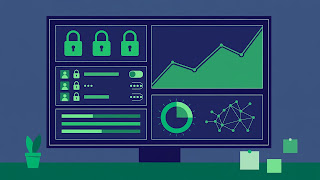
Before the formal audit, most companies run a readiness assessment, internally or with a consultant or compliance platform. You define the scope: which product, systems, offices, and cloud accounts, and which Trust Services Criteria are in play. Scoping too widely makes the audit expensive; scoping too narrowly makes the report useless to buyers.
Gap remediation
Next you close the gaps the readiness check found - writing missing policies, enforcing multi-factor authentication, formalizing access reviews and change management. For a Type II, these controls must then operate for the full observation window.
The audit itself
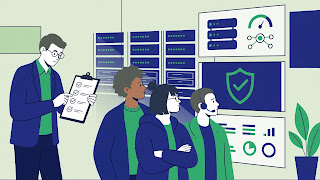
The CPA firm requests evidence, interviews staff, and samples records from the observation period. After fieldwork, the firm drafts the report, management responds to any exceptions, and the final report is issued. From kickoff to issued report, a first Type II commonly takes six to twelve months including the observation window; a Type I can be done considerably faster.
Cost framing
Costs vary widely with scope, but small SaaS companies typically budget for three buckets: the CPA firm's audit fee, an optional compliance automation platform, and internal staff time - frequently the largest of the three. It is worth treating the hidden cost of SaaS tooling and compliance overhead as part of the same planning conversation, because an audit program quietly adds tools, renewals, and ongoing evidence work to your annual spend.
How a Small SaaS Company Prepares
Preparation is mostly about turning informal good habits into documented, repeatable routines:
- Policies - write down your information security, access control, change management, incident response, and vendor management policies. Short and accurate beats long and fictional.
- Access control - enforce MFA everywhere, use single sign-on where possible, grant least-privilege access, review user access on a schedule, and keep proof the review happened.
- Change management - require tickets, peer review, and approval for production changes, with an audit trail linking code to deployment.
- Monitoring - centralize logs, set up alerts for security events, scan for vulnerabilities, and patch on a defined cadence.
- People processes - background checks where lawful, security training for all staff, and documented onboarding and offboarding so departing employees lose access promptly.
- Evidence habits - store screenshots, tickets, and reports in one place as you go; reconstructing a year of evidence in the final month is the painful path.
Foundational systems deserve the same discipline. A company's finance and operations core - the kind of system described in our beginner's guide to ERP software and how to choose one - usually sits inside the SOC 2 scope boundary for the vendors who sell it, and inside your vendor-risk review if you buy it.
Common Mistakes to Avoid
First, treating SOC 2 as a one-time project. Reports go stale - buyers typically expect one issued within the last year - so controls must run continuously. Second, writing policies nobody follows: auditors test reality, and a beautiful policy contradicted by your actual settings is worse than a modest one you honor. Third, neglecting vendor management: your sub-processors, from cloud hosting to support tooling, fall inside the story your report tells. Fourth, waiting until a big deal depends on it - a Type II observation window cannot be compressed, so starting late means losing the deal slowly. Finally, oversharing the report itself: full reports contain sensitive detail and are normally shared under NDA, not posted publicly.
FAQ
Is SOC 2 a certification?
Not exactly. There is no pass-or-fail certificate and no official logo. A CPA firm issues an attestation report with an opinion on your controls. When vendors say they are "SOC 2 compliant," they mean a report exists and the opinion was unqualified - which is why buyers ask to read the report rather than trust the phrase.
How long does SOC 2 take?
A Type I can often be completed within a few months. A Type II needs an observation window - commonly three to twelve months - on top of preparation, so six to twelve months end to end is realistic for a first report.
What is the difference between SOC 2 and ISO 27001?
ISO 27001 is an international standard you get certified against, focused on having an information security management system. SOC 2 is a US-origin audit report format focused on controls over a service. Many companies eventually hold both; North American buyers ask for SOC 2 most often.
How should a buyer verify a vendor's SOC 2 report?
Ask for the report under NDA and check five things: it is Type II, the issuing firm is a licensed CPA firm, the report date is recent, the scope covers the product you are buying, and any exceptions are minor and explained. A bridge letter can cover the gap between the period end and today.
Does a very small SaaS company need SOC 2?
Only if your customers demand it. If you sell to consumers or very small businesses, strong security practices plus clear documentation may be enough for now. If enterprise deals are stalling in procurement, that is the signal to start.
Conclusion
SOC 2 compliance is best understood as a discipline, not a document: design sensible controls around the Trust Services Criteria, run them consistently, and let an independent CPA firm verify that you did. Start with security, use Type I as a stepping stone if you need momentum, and build the evidence habits that make Type II an observation of normal operations rather than a yearly scramble. Done well, the report stops being a sales obstacle and becomes credible proof that your customers' data is in careful hands.